MARIO CASTRO
INDUSTRIAL DESIGNER

TENOCHTITLAN
Biodesign Project
Integrated Project Development.
The Tenochtitlan project was the winner in the Biodesign Challenge 2022 competition, in the category "Outstanding & Field Research" and participated in the "Green Being WTF" Design Festival in the City of Tallinn, Estonia.
His participation has allowed him to obtain national recognition and an honorable mention in the competition Diseña México in the category "Bachelor's Thesis", being exhibited at the Franz Mayer Museum.
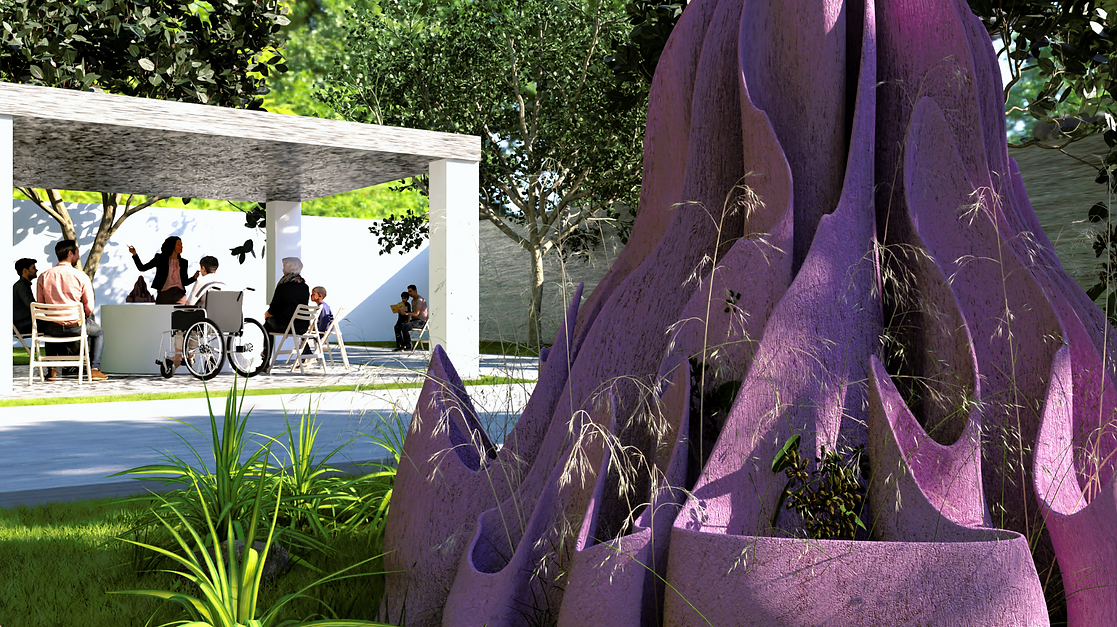
Tenochtitlan is a bio-cultural space within an urban garden that integrates important pillars within its community, such as people and their interaction within the space, as well as equally valuable fauna, which activates harmony in the environment and promotes an effective and healthy coexistence.


The relationship between nature and people is enriched through modular biosculptures that attract and protect pollinators, benefiting local crop production and increasing diversity in the orchard.

The proposal comprises biosculptures produced through 3D ceramic printing composed of Zacatecas clay, a type of clayey soil fired at high temperatures, characterized by its porosity.
Covered with horse manure, seeds that grow inside and outside the structure and tepojal, a light and highly porous stone.

Through these materials, the concept of inhabiting is deepened, incorporating ceramic sculpture into our artistic language.


The space proposes ecological solutions to the urgent need to free ourselves from plastic pollution, through the creation of biomaterials that replace them.

A solution that combines the effectiveness of biomaterials and organic waste to create pots and small seedling trays that are not only environmentally friendly, but also beneficial for plant growth.

Its ability to provide essential nutrients to the plants or crops it houses gives it significant value. As the organic waste incorporated into the pot decomposes, it releases vital nutrients into the soil, creating a symbiotic relationship between the pot and the plant.


This translates into healthier and livelier plants, without the need for synthetic fertilizers and harmful chemicals.
These materials are essential to define this concept and build these spaces. The architectural sense of the sculptures represent a coexistence between human beings and nature; and the exploration of biomaterials promotes a sustainable philosophy in the community.
